DFS
39&40. 组合总和
题目
给你一个 无重复元素 的整数数组 candidates 和一个目标整数 target ,找出 candidates 中可以使数字和为目标数 target 的 所有 不同组合 ,并以列表形式返回。你可以按 任意顺序 返回这些组合。
candidates 中的 同一个 数字可以 无限制重复被选取 。如果至少一个数字的被选数量不同,则两种组合是不同的。
对于给定的输入,保证和为 target 的不同组合数少于 150 个。
示例 1:
输入:candidates = [2,3,6,7], target = 7
输出:[[2,2,3],[7]]
解释:
2 和 3 可以形成一组候选,2 + 2 + 3 = 7 。注意 2 可以使用多次。
7 也是一个候选, 7 = 7 。
仅有这两种组合。
示例 2:
输入: candidates = [2,3,5], target = 8
输出: [[2,2,2,2],[2,3,3],[3,5]]
示例 3:
输入: candidates = [2], target = 1
输出: []
提示:
1 <= candidates.length <= 302 <= candidates[i] <= 40candidates的所有元素 互不相同1 <= target <= 40
可以重复选取
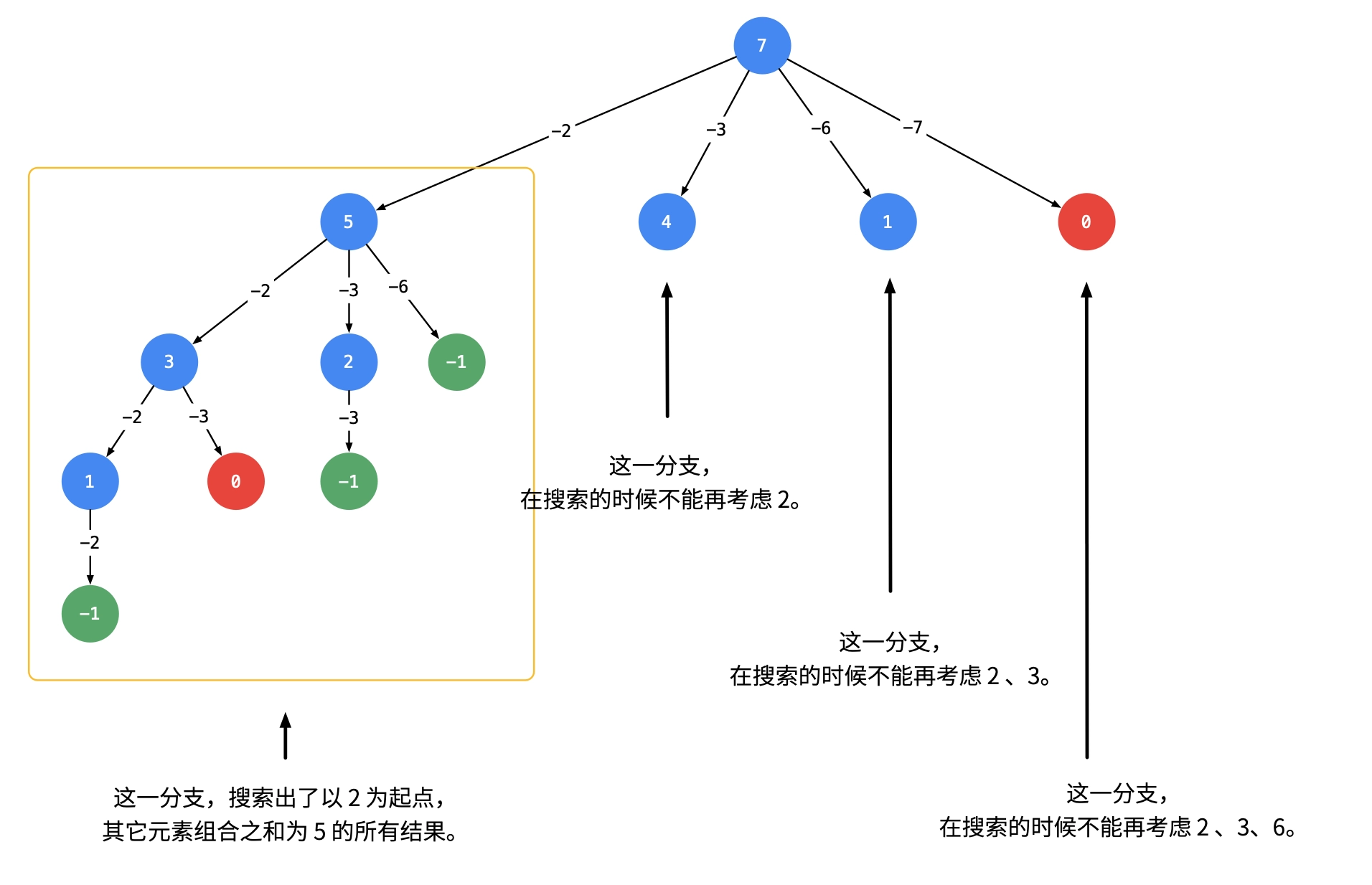
画出树状搜索图如下, 为了去除重复的情况, 我们需要按照某种顺序搜索,具体做法是:每一次搜索的时候,设置下一轮搜索的起点
def combinationSum(self, candidates: List[int], target: int) -> List[List[int]]:

        def dfs(candidates, begin, size, path, res, target):
            if target == 0:
                res.append(path)
                return

            for index in range(begin, size):
                residue = target - candidates[index]
                if residue < 0:
                    break

                dfs(candidates, index, size, path + [candidates[index]], res, residue)

        size = len(candidates)
        if size == 0:
            return []
        candidates.sort()
        path = []
        res = []
        dfs(candidates, 0, size, path, res, target)
        return res
不能被重复选取
与上面的区别在于
- index每次不要重复搜索,而是去寻找下一个
- 排除重复的元素
  def combinationSum2(self, candidates: List[int], target: int) -> List[List[int]]:
      def dfs(begin, path, residue):
          if residue == 0:
              res.append(path[:])
              return

          for index in range(begin, size):
              if candidates[index] > residue:
                  break

              if index > begin and candidates[index - 1] == candidates[index]:
                  continue

              # path.append(candidates[index])
              dfs(index + 1, path+[candidates[index]], residue - candidates[index])
              # path.pop()

      size = len(candidates)
      if size == 0:
          return []

      candidates.sort()
      res = []
      dfs(0, [], target)
      return res